For global buyers, the 2026 Teak Outdoor Occasional Chair market is moving beyond attractive silhouettes. Buyers now examine timber origin, moisture resistance, joinery, comfort, packaging, and long-term maintenance. A chair may look perfect in a showroom. It may behave differently after months of rain, heat, salt air, and uneven patios.
Richard Frinier, a respected outdoor furniture designer, has said, “Outdoor furniture should be as comfortable and stylish as indoor furniture.” That principle remains practical for teak seating. A well-designed Teak Outdoor Occasional Chair should support the lower back, drain water quickly, and remain stable on stone, timber, or concrete surfaces. Rounded edges feel safer beside a pool. Wide arms also make brief conversations more comfortable.
Small details matter.
This guide evaluates leading chair options for international purchasing teams, hospitality projects, retailers, and residential developments. It considers FSC documentation where available, plantation-grown teak, kiln-dried construction, stainless-steel hardware, cushion fabrics, and carton protection. These details can affect customs handling, warehouse damage, and customer returns.
Still, no chair is maintenance-free. Teak can silver naturally, develop surface checks, or change tone unevenly. Those changes are not always defects, but they should be explained clearly. Some product claims also sound stronger than the evidence behind them. Buyers should request test reports, material samples, production photographs, and clear warranty terms.
The best choice is not simply the most expensive model. It is the chair that matches climate, use frequency, design expectations, and realistic care habits. This review offers a careful starting point, while acknowledging one uncomfortable truth: outdoor furniture performance depends on both manufacturing quality and everyday neglect.
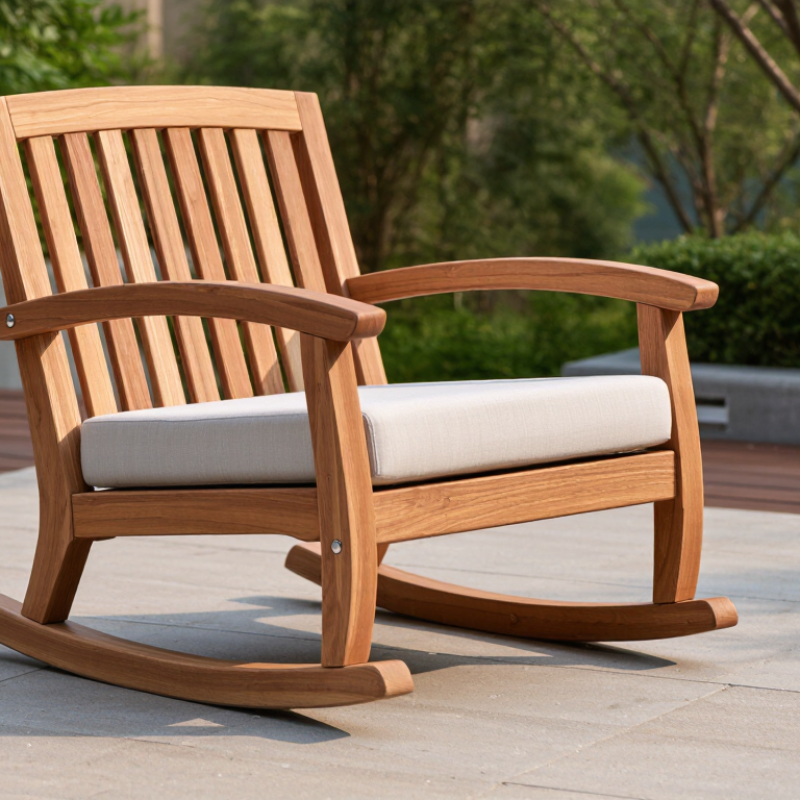
A teak outdoor occasional chair is a compact seat for flexible outdoor use. It may sit beside a lounge sofa, pool, balcony table, or garden path. Teak is valued for its dense grain and natural oil content. These qualities help the chair resist moisture, sunlight, and everyday wear. A well-made frame should feel stable, not loose or hollow. Smooth sanding matters too, especially around arms and front edges.
Its uses extend beyond extra seating. Guests can use it during outdoor dining, while a cushion can create a quieter reading corner. In hospitality settings, the chair supports patios, terraces, and shaded waiting areas. Buyers should examine mortise-and-tenon joints, drainage gaps, and cushion fabric performance. Materials can behave differently in humid, coastal, and dry climates. No chair is maintenance-free. Overlooking this point causes disappointment.
Check the wood source and product documentation before ordering internationally. Ask for exact dimensions, packed weight, and moisture guidance. Test the chair with firm pressure on both arms. A slight movement may reveal weak joinery. Keep cushions dry after rain, even when the frame tolerates moisture. Teak may age into a silver-gray tone, which some buyers prefer. Others expect the original honey color and need suitable maintenance. Test samples first.
Teak suits outdoor occasional chairs because its dense grain handles changing weather well. Natural oils help the wood resist moisture, insects, and surface decay. In practical use, a teak chair can remain stable beside a pool, patio, or covered balcony. Its warm golden color also fits stone, concrete, and woven outdoor furniture.
It is not maintenance-free. Honest buyers should expect small cracks, uneven fading, and occasional roughness after long exposure. That is normal wood behavior. Unfinished teak gradually turns silver-gray under sunlight, while regular cleaning helps preserve its original tone. A soft brush, mild soap, and clear water usually remove dust and light stains. Avoid harsh chemicals, which may damage the surface.
A well-designed occasional chair needs more than suitable timber. Check the joint construction, leg balance, seat depth, and drainage gaps. Water should not collect beneath the seat. Stainless or corrosion-resistant hardware also supports longer outdoor use. For global purchasing, ask about wood origin, moisture control, packaging strength, and quality inspection records. Certification may vary by region, so verify documents instead of relying on broad claims. Teak is durable, but poor design can still shorten its service life.
For global buyers, a teak outdoor occasional chair must balance comfort, strength, and visual simplicity. Seat height around 40–45 centimeters suits many users, but regional preferences still vary. A gently angled back supports longer sitting without making the chair look bulky. Wide arms help, especially beside low tables. They can also increase shipping volume.
Construction details deserve close inspection. Dense, well-seasoned teak resists outdoor moisture better than poorly dried timber. Ask for moisture-control records, joint specifications, and load-test results. Mortise-and-tenon joints usually offer dependable stability when accurately fitted. Stainless steel hardware reduces staining and corrosion near coastal environments. Drainage gaps under the seat prevent water from remaining after rain.
Small details matter.
A smooth finish should not hide uneven grain, open joints, or unstable legs. I have seen attractive samples fail when packaging allowed armrests to rub during transit. Protective corners, moisture barriers, and clear assembly instructions reduce this risk. Buyers should also confirm carton dimensions, replacement-part policies, and maintenance guidance before ordering. Responsibly sourced teak with traceable documentation supports more reliable purchasing, although certification claims should be checked independently. One design may suit a dry resort perfectly, yet perform poorly in a humid balcony setting. That difference deserves practical testing, not assumptions.
Selecting the best teak outdoor occasional chair requires more than attractive grain and a warm golden color. In practical inspections, I check kiln-dried wood, tight joints, and smooth sanding. Teak should feel dense, not hollow or unusually light. Press each arm gently. Movement may reveal weak joinery. Small surface marks are acceptable, but open cracks deserve closer attention.
Comfort depends on proportions. A seat around 45 centimeters high suits many users, while a gently sloped back reduces pressure. Test the chair with your feet resting naturally on the ground. The seat should support your thighs without cutting behind your knees. Cushions should dry quickly and retain their shape. Thin padding may look neat, yet it often becomes uncomfortable after extended use.
Weather resistance comes from both teak quality and construction details. Look for water-shedding surfaces, corrosion-resistant fasteners, and drainage gaps beneath cushions. Untreated teak can gradually turn silver-gray under sunlight. That change is normal, not automatically damage. However, repeated wetting may encourage stains or mildew in shaded areas. I recommend checking moisture exposure, coastal air, and winter storage conditions before ordering. No inspection is perfect. I once underestimated how quickly a covered balcony trapped humidity. That mistake changed my evaluation process. Reliable sellers should provide timber details, dimensions, care guidance, and consistent product photographs. Ask for close-up images of joints. Clear answers usually indicate better quality control.
For global buyers, a teak outdoor occasional chair should begin with traceable wood, not attractive photography. The FAO Global Forest Resources Assessment 2020 records 4.06 billion hectares of global forest cover. It also reports continued forest loss, making origin verification important. Request the botanical species name, harvest country, supplier chain-of-custody records, and volume consistency. FSC reported more than 160 million hectares of certified forests worldwide in 2024. Certification helps, but it does not replace transaction-level checks. Ask for evidence.
Certification documents should match the shipment. Check product descriptions, invoice details, treatment records, and packaging marks before loading. Import requirements can differ by destination, including timber due diligence and pest-control rules. A chair may pass a factory inspection yet fail because its documents are incomplete. That is an uncomfortable but common sourcing gap. Independent laboratory testing can verify moisture content, coating performance, load capacity, and formaldehyde emissions from composite components. Small details matter.
Teak performs well outdoors because its natural oils resist moisture, but it is not maintenance-free. Place the chair on a level surface and keep drainage clear beneath the legs. Clean dust with mild soap and water, then allow complete drying. Avoid aggressive pressure washing. A silver-grey surface is normal weathering, not automatically damage. For long-term color retention, use a suitable outdoor teak protectant and repeat the treatment carefully. Care instructions should be printed clearly for end users. In practice, buyers often underestimate after-sales guidance. That deserves more attention.
| Evaluation Dimension | Recommended Specification or Requirement | Typical Data or Range | Buyer Verification Point |
|---|---|---|---|
| Product Type | Teak outdoor occasional chair | Single lounge, side, or accent chair for patios, terraces, gardens, balconies, and hospitality areas | Confirm intended use, seating position, cushion inclusion, and commercial or residential application |
| Teak Material | Use mature, legally harvested teak with consistent grain and sound joinery | Commonly supplied as plantation-grown or responsibly sourced solid teak; natural color ranges from golden brown to medium brown | Request species identification, harvest location, legality documents, and a material sample |
| Wood Moisture | Moisture level should match the destination climate before final packing | Often targeted around 10%–14% for many outdoor furniture shipments; the correct level depends on destination conditions and supplier specifications | Specify the test method, sampling plan, acceptable range, and inspection timing in the purchase contract |
| Dimensions | Compact footprint with comfortable outdoor seating proportions | Typical overall size: 650–800 mm wide, 700–850 mm deep, and 750–900 mm high; seat height commonly 380–480 mm without a loose cushion | Approve a dimension drawing and define tolerances before production |
| Load Capacity | Stable frame, reinforced joints, and tested seating platform | A buyer may specify a minimum static load of 110–150 kg, subject to the applicable test standard and chair design | Request test evidence for the exact model; do not rely only on a general product catalogue rating |
| Outdoor Construction | Mortise-and-tenon, dowel, or engineered outdoor joinery with drainage-conscious design | Use corrosion-resistant stainless-steel or suitably protected fasteners; avoid water-trapping cavities and sealed end-grain cracks | Inspect joints, screw heads, end grain, drainage gaps, and movement allowances on the approved sample |
| Surface Finish | Natural unfinished teak or an exterior-rated protective finish | Unfinished teak generally weathers from brown to silver-gray; an oil or film finish requires a defined reapplication and maintenance schedule | Confirm whether the quoted price includes sanding, sealer, oil, stain, or topcoat and record the exact finish system |
| Cushion and Textile Option | Quick-drying, removable cushion with outdoor-rated cover and drainage-friendly filling | Specify UV-resistant fabric, solution-dyed content where available, removable covers, rust-resistant zippers, and fast-drying foam or layered filling | Verify colorfastness, water-repellency claims, cleaning instructions, replacement-cover availability, and textile test reports |
| Sustainable Sourcing | Traceable wood supply with documented legality and chain of custody | Acceptable evidence may include a valid FSC or PEFC chain-of-custody claim, government legality documentation, harvest permits, and shipment traceability | Check certificate scope, certificate status, product claim, species, origin, and invoice wording; certification should cover the relevant product and supply chain |
| EU Market Compliance | Prepare wood-origin and due-diligence information for applicable European Union requirements | Maintain species name, country of harvest, harvest-area information where required, supplier records, product classification, and risk-assessment evidence | Ask the importer or compliance adviser to confirm the applicable EUDR timeline, responsibilities, and submission process for the transaction |
| Safety and Performance Testing | Test the finished chair rather than relying only on raw-material data | Potential references include EN 581-1 for general safety requirements and EN 581-2 for mechanical safety and strength of outdoor seating | Confirm the standard edition, test laboratory, sample identity, test loads, results, and report date |
| Climate Suitability | Select construction and finish according to humidity, rainfall, salt exposure, sunlight, and freeze-thaw conditions | Teak performs well outdoors, but repeated wetting, poor drainage, high humidity, coastal salt, and temperature changes can still cause checking, discoloration, corrosion, or joint movement | Request a destination-specific care guide and test fasteners and finishes for coastal or high-UV markets |
| Packaging | Protect corners, legs, finish, and cushions against abrasion and moisture during international transport | Use recyclable corrugated cartons where feasible, moisture protection suited to the route, internal separators, and export pallets compliant with ISPM 15 when solid-wood packaging is used | Approve carton dimensions, drop and compression requirements, pallet marks, container loading plan, and packaging photographs |
| Shipping Efficiency | Optimize nesting, knock-down construction, and cubic utilization without weakening the product | Record packed dimensions, gross weight, net weight, cartons per pallet, and estimated cubic volume before final quotation | Compare freight by cubic meter and chargeable weight; confirm whether cushions are packed separately |
| Quality Inspection | Use pre-production, during-production, and pre-shipment inspection checkpoints | Inspect wood grade, dimensions, moisture, finish, color consistency, joint strength, hardware, cushion fit, odor, carton condition, and quantity | Define acceptable quality limits, inspection level, defect classification, sampling plan, and corrective-action procedure |
| Indicative Production Timing | Allow time for material preparation, sampling, production, finishing, inspection, and export packing | Common planning allowance: 30–60 days after approved sample and deposit; custom finishes, cushions, or certification checks may extend the schedule | Obtain a milestone schedule with sample approval date, production completion, inspection date, and shipment-ready date |
| Commercial Terms | Use a clearly defined international sales contract | State quantity, model code, specifications, packaging, inspection, warranty, payment milestones, currency, and selected Incoterm under Incoterms® 2020 | Clarify responsibility for export clearance, main carriage, insurance, import clearance, duties, taxes, and delivery to the final site |
| Routine Care | Clean regularly and keep the chair ventilated and drained | Use mild soap, clean water, and a soft brush; remove spills promptly; avoid abrasive cleaners, pressure washing, and chlorine-based products unless specifically approved | Provide written care instructions and explain the visual difference between natural silvering and finish failure |
| Seasonal Storage | Protect furniture from prolonged standing water, snow, severe storms, and unnecessary exposure when not in use | Store cushions dry and ventilated; use a breathable cover only after the chair is clean and dry; do not seal damp furniture inside plastic | Confirm storage guidance for the destination climate and warranty conditions for covered or enclosed storage |
| Warranty Framework | Define coverage for structural defects separately from normal weathering and cosmetic changes | Contract terms commonly distinguish frame integrity, hardware corrosion, finish deterioration, fabric, cushions, misuse, neglect, and ordinary color change | Set the warranty period, claim evidence, remedy, spare-parts process, exclusions, and responsibility for return or replacement freight |
Its dense grain handles changing weather well. Natural oils help resist moisture, insects, and surface decay. The wood suits patios, poolsides, and covered balconies.
No, it still needs basic care. Sunlight may create silver-gray color, small cracks, or rough patches. That is normal wood behavior.
Use a soft brush, mild soap, and clear water. Let the chair dry completely. Avoid harsh chemicals.
Inspect tight joints, balanced legs, and smooth sanding. Press each arm gently. Movement may reveal weak joinery.
A seat near 45 centimeters high suits many users. A gently sloped back can reduce pressure. Your feet should rest naturally on the ground.
Look for drainage gaps. Water should not remain under the seat or cushion. Poor drainage can encourage stains and mildew.
Check the teak quality, water-shedding surfaces, and corrosion-resistant fasteners. Consider coastal air, heavy rain, and winter storage. Covered spaces can still trap humidity.
Ask about wood origin, moisture control, dimensions, packaging strength, and inspection records. Request close-up joint photographs. Clear answers matter.
Not always. Minor marks can occur in natural wood. Open cracks, loose joints, or unusually light timber deserve closer attention.
Not necessarily. Untreated teak gradually becomes silver-gray in sunlight. I once underestimated balcony humidity, so local exposure deserves careful review.
A Teak Outdoor Occasional Chair is a versatile seating piece designed to provide comfort and style in gardens, patios, balconies, resorts, and other outdoor spaces. Teak is especially suitable because its natural oils, dense grain, and strong structure help it withstand moisture, sunlight, and seasonal changes. For global buyers, important design and construction factors include stable joinery, balanced proportions, ergonomic support, smooth finishing, suitable cushions, and a frame engineered for regular outdoor use.
When evaluating a Teak Outdoor Occasional Chair, buyers should consider wood quality, surface treatment, weight capacity, comfort, drainage, and resistance to weather exposure. Responsible sourcing also involves checking material traceability, relevant certifications, packaging standards, and import requirements in the target market. With regular cleaning, proper drying, protective covers when needed, and appropriate storage during severe weather, teak outdoor seating can maintain its performance and appearance for many years.