Choosing the best Outdoor Bar Counter Stool requires more than matching colors with a patio.
Grand View Research estimates that the global outdoor furniture market reached approximately USD 18.25 billion in 2023. Its projected growth reflects stronger demand for comfortable, durable outdoor living spaces. Yet market growth does not make every stool a sensible purchase.
Measurements matter first. A 36-inch counter usually suits a 24-to-27-inch seat. A 40-to-42-inch bar needs a 28-to-30-inch seat. Leave about 9 to 12 inches between the seat and countertop. This space supports relaxed knees and easier movement. Too little space becomes uncomfortable quickly.
Outdoor furniture designer Richard Frinier has said, “Outdoor rooms should be designed with the same care as indoor rooms.” That principle applies directly here. Look for powder-coated aluminum, marine-grade polymer, treated teak, or responsibly selected synthetic wicker. Check UV resistance, drainage holes, rust-resistant hardware, and a stable footrest. A swivel base may improve access, but it can reduce stability on uneven decking.
Comfort is easy to underestimate.
A thin cushion may look elegant in a product photograph. After two hours, it may feel very different. Review seat depth, back support, cushion density, and cleaning instructions. Safety standards, including relevant ASTM or EN 581 guidance, can offer useful reference points, although certification details vary by market.
The honest choice may not be the trendiest one. Some stools still need covers, seasonal storage, or occasional tightening. Before buying, test the height, inspect the joints, and question every attractive claim. A dependable Outdoor Bar Counter Stool should survive real weather, repeated use, and a few imperfect decisions.
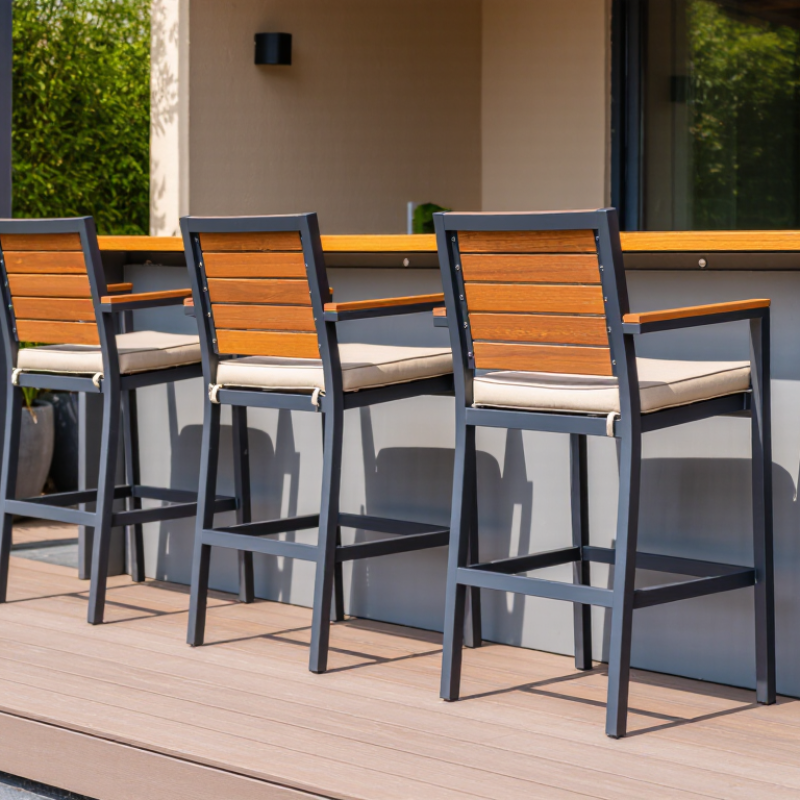
Define the Ideal Height and Dimensions for an Outdoor Bar Counter Stool
How to Choose the Best Outdoor Bar Counter Stool?
The ideal outdoor bar counter stool begins with accurate height measurements. Measure from the patio floor to the counter’s underside, not just its top. A 36-inch counter usually suits a 24–27-inch seat height. A 40–42-inch bar commonly needs a 28–30-inch seat. Leave 9–13 inches between the seat and countertop. This gap allows comfortable knees and natural elbow movement. I once estimated from the counter height alone, and the stools felt cramped. Cushions also compress, so measure the finished seat height carefully.
Dimensions matter beyond height. Choose a stool about 18–22 inches wide for personal comfort. Allow at least 6 inches between neighboring stools. A deeper seat may feel relaxing, but it can obstruct narrow walkways. For outdoor use, check the full frame depth, including backrests and arms. Test the stool beside the counter before buying, if possible. Sit for several minutes. Comfort can change quickly.
Tips: Mark the stool footprint with masking tape outdoors. Check legroom from several angles. Confirm that doors, grills, and railings still open freely. Consider adjustable feet on uneven patios, but do not assume they solve every stability problem. Weather exposure may slightly change materials over time, so inspect joints and fasteners regularly.
How to Choose the Best Outdoor Bar Counter Stool? – Define the Ideal Height and Dimensions for an Outdoor Bar Counter Stool
| Dimension or Selection Factor | Recommended Measurement | Why It Matters | Practical Selection Tip |
|---|---|---|---|
| Counter height | 34–36 in (86–91 cm) | This is the common height range for outdoor kitchen counters and counter-height tables. | Measure from the finished floor to the top surface, including any tile or countertop material. |
| Ideal seat height | 24–27 in (61–69 cm) | A suitable seat-to-counter relationship generally leaves about 9–12 in (23–30 cm) between the seat and the underside of the counter. | Choose a 24–25 in stool for lower counters and a 26–27 in stool for counters near 36 in high. |
| Seat-to-counter clearance | 9–12 in (23–30 cm) | Adequate clearance provides legroom and allows users to sit comfortably without hitting the counter edge. | Check the distance to the counter’s lowest obstruction, not only the countertop height. |
| Overall stool height | 32–40 in (81–102 cm), depending on backrest design | The overall height affects visual proportion, storage, and clearance beneath awnings or balcony roofs. | Leave at least 2–4 in (5–10 cm) above the stool back when placing it under a fixed overhead structure. |
| Seat width | 16–20 in (41–51 cm) per person | Seat width influences comfort and determines how many stools can fit along the counter. | Use wider seats for frequent, extended dining; use narrower seats where space is limited. |
| Recommended center-to-center spacing | 24–28 in (61–71 cm) | This spacing helps prevent elbows, shoulders, and chair frames from colliding during meals. | For bulky armrests or wide seats, plan closer to 28– treinta in (71–76 cm) between centers. |
| Seat depth | 16–19 in (41–48 cm) | A moderate depth supports the thighs while keeping the stool practical for outdoor circulation. | Select a deeper seat only when there is enough room behind the stool for movement. |
| Front-to-back footprint | 20–25 in (51–64 cm) | The footprint determines how much floor area is occupied and how easily people can pass behind the stool. | Use compact, backless designs for narrow patios; use larger footprints only in open layouts. |
| Clearance behind the stool | 30–36 in (76–91 cm) for a comfortable passage | Additional space is needed for people to pull out the stool, sit down, and walk behind it. | Allow more room when the walkway is part of a busy route or when stools have backs and arms. |
| Footrest height | 7–10 in (18–25 cm) below the seat | A properly positioned footrest supports the feet and reduces pressure on the back of the thighs. | Choose a continuous footrest or a stable crossbar with rounded edges for frequent use. |
| Backrest height above seat | 10–16 in (25–41 cm) | A higher backrest offers more support, while a lower backrest creates a lighter appearance and easier storage. | Prioritize back support for long meals; consider a backless stool for occasional seating. |
| Armrest clearance | At least 2 in (5 cm) below the counter underside | This clearance allows the stool to slide under the counter and prevents armrests from scraping the surface. | Measure the armrest’s highest point and the counter’s lowest underside before purchasing. |
| Number of stools | Counter usable length ÷ 24–28 in (61–71 cm) | Spacing based on the usable counter length prevents overcrowding and maintains personal space. | Subtract corner zones, end panels, posts, and built-in appliances before calculating capacity. |
| Outdoor construction | Corrosion-resistant frame and outdoor-rated seat materials | Outdoor furniture is exposed to moisture, ultraviolet light, temperature changes, and airborne contaminants. | Look for rust-resistant metal, weather-resistant coatings, quick-drying cushions, and drainage openings. |
| Stability and floor protection | Leveling feet or protective glides; non-slip base where appropriate | A stable base reduces tipping on uneven patios and helps protect decking, tile, or stone surfaces. | Check that the feet remain stable on the actual outdoor surface and do not trap standing water. |
FAQS
Choose a seat about 24–27 inches high. Measure to the counter’s underside. Measure the finished seat, including cushion compression.
A 28–30-inch seat usually fits. Leave 9–13 inches between the seat and countertop for comfortable knees and elbows.
Allow at least 6 inches between neighboring stools. This gives elbows and movement more room.
A width of 18–22 inches often feels comfortable. Check total depth, including arms and backrests, especially beside narrow walkways.
Place it beside the counter and sit for several minutes. Mark its footprint with masking tape. Comfort can change quickly.
Powder-coated aluminum resists rust and stays lightweight. Solid teak handles weather naturally. Synthetic wood suits wet patios and needs simple cleaning.
No. Wipe the frame, dry trapped water, and store soft parts during severe weather. No material is perfect.
Check the weight rating, joints, footrest, and backrest. Shift your weight slightly. A stable stool should not wobble or tilt.
Include cushions, covers, replacement hardware, and storage costs. A heavier stool may feel safer, but moving it can become difficult.
Look for blocked doors, grills, and railings. Check drainage beneath the seat and sealed joints. Attractive finishes can hide weak details.
Conclusion
Choosing the right Outdoor Bar Counter Stool begins with measuring your counter or bar height to ensure proper legroom and comfortable seating. Consider the stool’s overall dimensions, including seat width, depth, and backrest height, so it fits naturally within your outdoor space without blocking walkways. Since outdoor furniture faces sun, moisture, and temperature changes, select durable, weather-resistant materials and finishes designed for long-term use.
Comfort is equally important, so look for supportive backrests, footrests, suitable cushioning, and an ergonomic seat shape. The stool should also complement the style and colors of your patio, deck, or outdoor kitchen. Before buying, check its stability, weight capacity, safety features, and maintenance requirements. Easy-to-clean surfaces and replaceable cushions can improve convenience and value over time. By balancing size, durability, comfort, appearance, and upkeep, you can choose an Outdoor Bar Counter Stool that enhances both the function and atmosphere of your outdoor living area.