For global buyers, material choice affects more than appearance. It influences durability, maintenance, shipping, and long-term customer trust. Indonesian Teak Furniture attracts attention because teak handles humidity, strong sunlight, and frequent outdoor use. Its natural oils can help resist moisture and everyday wear. The grain also gives each table, chair, or cabinet a distinct surface.
Quality, however, depends on more than the teak species. Responsible workshops should explain wood origin, drying methods, joinery, finishing products, and packaging standards. Buyers should request clear documentation for legal and sustainable sourcing. Moisture content matters. Poorly dried wood may shrink, crack, or loosen after arriving in a different climate. Experienced suppliers discuss these risks openly, rather than promising perfection.
Small details reveal production discipline. Check smooth drawer movement, even joints, stable legs, and consistent sanding. Reclaimed teak may contain nail marks, color changes, or filled holes. These features can add character, but they may not suit every project. That distinction deserves careful thought. Some finishes look beautiful in photographs yet feel too glossy in person. Samples help prevent expensive misunderstandings.
Indonesian Teak Furniture can offer strong value when design, craftsmanship, and documentation align. Yet price alone should not guide the decision. Buyers also need realistic lead times, dependable communication, and clear after-sales support. Regional climate, customer expectations, and installation conditions should shape the order. A thoughtful purchasing process does not remove every uncertainty. It makes those uncertainties visible, manageable, and easier to review.
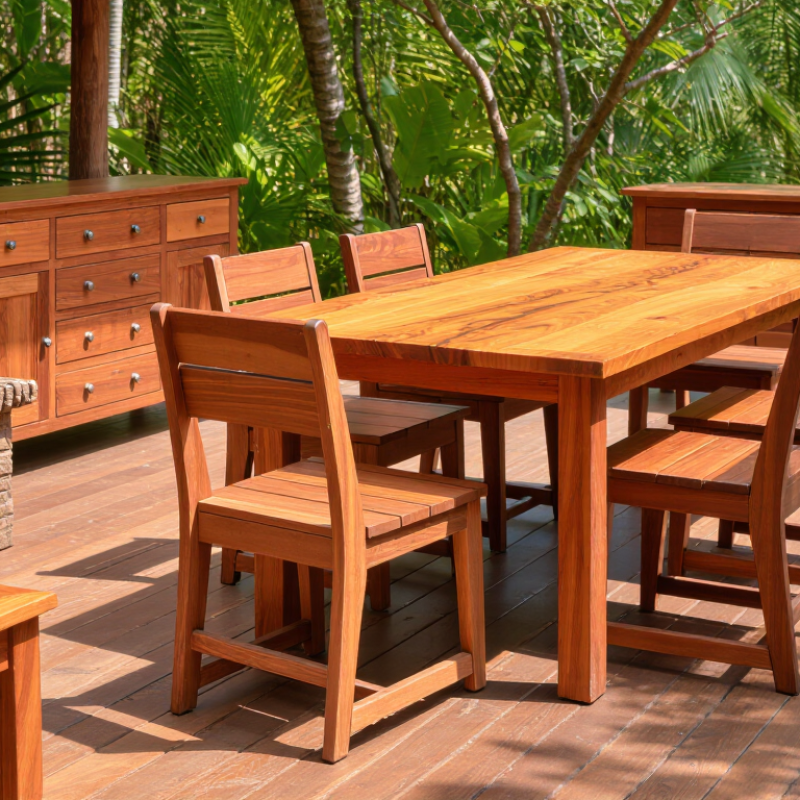
Indonesian teak is valued for more than its warm, golden color. Tectona grandis grows in a tropical climate with steady heat and seasonal rain. These conditions can produce dense timber with expressive grain patterns. Natural oils help the wood resist moisture, insects, and daily outdoor exposure. That makes it practical for patios, dining rooms, and coastal homes.
In my experience, well-made teak furniture feels solid before it looks beautiful. Smooth edges, balanced joints, and consistent moisture levels matter greatly. Responsible Indonesian producers often use managed plantation teak and provide origin or legality documents. Buyers should still verify these records. Teak is not flawless. Small knots, color changes, and minor grain movement are normal. I once saw a table rejected for tiny marks that later became part of its character. That decision still deserves reflection.
Tips: Check the wood grade, kiln-drying method, joinery, and finish before ordering. Ask for close-up photos of corners and table undersides. Outdoor furniture needs drainage and regular cleaning. Avoid sealing damp wood. Also, confirm dimensions carefully, because heavy teak pieces are difficult to reposition after delivery. Natural variation is expected, but structural cracks are not. A reliable supplier should explain both qualities and limitations clearly.
Why Choose Indonesian Teak Furniture for Global Buyers?
How Indonesian Teak Furniture Is Produced
A reliable production story begins with carefully selected teak logs. Responsible workshops verify timber sources and keep purchase records for traceability. They remove bark, inspect grain, and cut boards according to the furniture design. Skilled workers often leave useful grain patterns visible. This gives each table a distinct surface.
The boards then move through controlled drying. Kiln drying reduces excess moisture and helps limit future warping. Many workshops target furniture moisture levels suitable for the destination climate. That target still needs regular testing. A rushed schedule can create cracks after shipping.
Craftspeople shape legs, panels, and frames with accurate measurements. Traditional mortise-and-tenon joints may support heavy furniture for years. Workers sand the surface several times, changing from rough grit to fine grit. They apply a protective finish in thin layers. Between coats, the surface is checked under clear light. Small dust marks can remain. Good quality control records them instead of hiding them.
Before export, inspectors check dimensions, joint strength, surface feel, and packaging. Teak naturally contains oils, so finishes must be compatible with the wood. Buyers should request moisture reports, timber documentation, and clear inspection standards. Natural knots and color variation are not always defects. They are part of teak’s character, although inconsistent workmanship should not be excused.
| Data Dimension | Typical Indonesian Teak Furniture Data | Why It Matters to Global Buyers | Production Consideration |
|---|---|---|---|
| Botanical Species | Tectona grandis, commonly known as teak | Provides a clearly identifiable hardwood material with established international use in outdoor and indoor furniture. | Logs are sorted by diameter, grain quality, moisture condition, and intended furniture component. |
| Main Indonesian Growing Area | Teak is widely cultivated in Java and other suitable areas of Indonesia. | A strong plantation tradition supports a consistent raw-material supply for furniture production. | Material origin and harvesting documentation should be checked for each shipment. |
| Air-Dry Density | Approximately 610–750 kg/m³ at around 12% moisture content; values vary by tree and board. | Offers a practical balance between durability, strength, and manageable furniture weight. | Cutting plans should account for density variation between heartwood, sapwood, and individual boards. |
| Janka Hardness | About 1,070 lbf, or approximately 4.7 kN, for commonly referenced teak data. | Helps furniture resist everyday dents and surface wear while remaining workable with professional tools. | Sharp tooling and appropriate drilling methods are recommended because teak can be moderately demanding to machine. |
| Natural Oil Content | Teak contains natural oils and extractives that contribute to moisture resistance and dimensional performance. | Makes teak suitable for patios, garden furniture, hospitality areas, and coastal environments when properly designed and maintained. | Surface preparation is important before painting, gluing, or applying certain finishes because natural oils may affect adhesion. |
| Dimensional Movement | Reference shrinkage values are about 2.6% radial and 5.3% tangential from green to oven-dry condition. | Lower movement than many less stable timbers can help reduce seasonal gaps, splitting, and warping. | Joinery must allow for normal wood movement, especially in wide tabletops, doors, and outdoor panels. |
| Color and Grain | Fresh heartwood is generally golden-brown to medium brown and develops a deeper patina with exposure to light. | Creates a premium natural appearance without requiring heavy coloration or opaque coating. | Boards are selected and matched for color, grain direction, knots, and visible character before assembly. |
| Material Preparation | Typical sequence: log inspection, sawing, board grading, stacking, and moisture conditioning. | Structured preparation improves consistency across large export orders. | Boards are stacked with spacers to promote airflow and reduce uneven drying. |
| Kiln-Drying Target | Indoor furniture is commonly conditioned near 8–12% moisture content; outdoor specifications may differ by climate and design. | Appropriate moisture content helps limit cracking, warping, and joint movement after delivery. | The correct target depends on the buyer’s destination climate, product thickness, and intended use. |
| Manufacturing Stages | Cutting → component shaping → sanding → dry assembly → final assembly → finishing → inspection → packing. | A documented workflow makes quality requirements easier to communicate and verify internationally. | Critical checks include dimensions, joint strength, wobble, surface smoothness, finish uniformity, and hardware fit. |
| Outdoor Design Requirements | Outdoor products require drainage, rounded edges, suitable joinery, corrosion-resistant hardware, and an appropriate finish strategy. | Good design is essential because no wood is completely maintenance-free in continuous sun, rain, or humidity. | Products should be tested for water pooling, joint movement, finish behavior, and hardware corrosion. |
| Sustainability and Legality | Indonesian timber supply may be supported by the national Timber Legality Assurance System, known as SVLK. | Legality documentation can help importers meet responsible-sourcing and customs requirements. | Buyers should request current legality documents, shipment records, and traceability information for the specific order. |
| Maintenance Expectation | Unfinished teak gradually changes to a silver-gray surface outdoors; cleaning and periodic refinishing can preserve a warmer brown appearance. | Buyers can choose between a natural weathered look and a maintained golden-brown finish. | Care instructions should specify cleaning methods, finish renewal intervals, storage, and protection from prolonged standing water. |
Note: Ranges are typical reference values and may vary according to plantation conditions, board location, moisture content, product design, and destination climate.
Indonesian teak performs well because its natural oils slow moisture absorption. Its dense grain also supports outdoor use across changing seasons. In a humid veranda, a well-built teak table is less likely to swell dramatically. In a dry, heated room, it usually resists sudden cracking better than many softer woods. This stability matters to buyers shipping furniture across regions.
Experienced furniture makers still allow for normal wood movement. Teak is durable, not invincible. Rain, strong sunlight, and poor drainage can discolor or roughen its surface. A chair left with water trapped beneath its legs may develop stains. Small details matter. Slatted designs, raised feet, and careful joinery help water escape. These practical choices often matter as much as the timber itself.
Indonesian teak can suit coastal homes, cool gardens, and sunlit interiors, but climate guidance should remain specific. In salty air, rinse outdoor pieces occasionally and avoid harsh cleaners. In freezing conditions, keep standing water from entering joints before temperatures drop. An unfinished surface may turn silver-gray under ultraviolet light; that is a visual change, not immediate structural failure. Some buyers expect zero maintenance, which is unrealistic. Not maintenance-free. Even excellent teak needs sensible placement and occasional inspection. I would question any claim that it never moves, never stains, or fits every climate without adjustment.
Indonesian teak offers durability, but sustainability deserves equal attention. FAO’s Global Forest Resources Assessment 2020 recorded about 92.1 million hectares of forest in Indonesia. The same assessment reported a global net forest loss of 178 million hectares between 1990 and 2020. These figures make responsible sourcing more than a marketing phrase.
Traceable purchasing starts with verified origin. Indonesia’s SVLK timber legality system records harvesting, processing, and transport controls. Buyers should request current legality documents and a clear chain of custody. Certification can add confidence, but it is not a magic shield. Paperwork may still contain gaps. Ask practical questions about plantation management, worker safety, kiln drying, and packaging waste.
Durable furniture can reduce replacement demand over time. Teak’s natural oils help it resist moisture, insects, and outdoor wear. That may support longer product use, when construction and maintenance are appropriate. However, durability alone does not prove sustainability. The ITTO Biennial Review and Assessment of the International Timber Situation highlights the importance of legality verification and transparent supply chains in tropical timber trade. I would also check whether suppliers separate plantation teak from reclaimed teak. The distinction matters.
A responsible buyer compares documents, material quality, and real operating practices. Small checks often reveal large differences.
Indonesian teak furniture appeals to global buyers because teak handles heat, moisture, and daily use well. Its natural oils help resist decay, especially in outdoor settings. However, attractive grain alone does not prove quality. Buyers should check the wood’s age, density, moisture level, and construction method. Kiln-dried teak usually offers better dimensional stability during international shipping. Still, “kiln-dried” needs evidence, not just a sales claim. Request moisture readings, product specifications, and clear photographs of joints, edges, and undersides.
Think about your destination climate. Furniture moving from humid Indonesia to a dry inland region may develop small gaps or surface changes. This is not always a manufacturing failure. Poor acclimatization can also cause problems. Confirm packaging standards, delivery terms, replacement procedures, and after-sales communication before payment. Responsible buyers should request legal sourcing documentation and verify that materials meet import rules in their country. These checks feel slow. They can prevent expensive surprises.
Tips: Measure doorways and elevators first. Ask for a finished sample when possible. Compare chair weight and joint strength, not only the price. Inspect mortise-and-tenon joints, smooth sanding, and even finishing. For outdoor pieces, clarify whether cushions resist water and sunlight. Keep written records of agreed dimensions, wood grade, finish, and delivery dates. My practical lesson is simple: beautiful teak can still be poorly made. Examine the hidden details.
Its warm color, dense grain, and natural oils create a practical, expressive material. Small knots are normal. These details can add character.
Yes, when properly designed and maintained. Slatted surfaces, raised feet, and good drainage help protect the wood outdoors. Water must not remain trapped.
Teak generally performs well in humid, dry, and coastal environments. However, temperature and moisture changes may cause small gaps or surface movement. It is durable, not invincible.
Yes. Clean outdoor pieces regularly and inspect joints, feet, and drainage areas. Rinse furniture exposed to salty air. Zero maintenance is unrealistic.
Unfinished teak may become silver-gray under strong ultraviolet light. This is usually a visual change, not immediate structural damage. Color change is normal.
Check wood density, grade, moisture level, kiln-drying evidence, joinery, sanding, and finish. Request close-up photographs of corners and undersides. Hidden details matter most.
Ask for origin, legal sourcing, product specifications, moisture readings, packaging details, and delivery terms. Verify import requirements in your country. Sales claims need evidence.
Measure doorways, elevators, and room access before ordering. Confirm dimensions, weight, replacement procedures, and delivery dates in writing. Heavy furniture is difficult to reposition.
Minor knots, color changes, and limited grain movement are normal. Structural cracks, unstable joints, or severe splitting are not. Do not confuse character with damage.
Compare joint strength, chair weight, surface consistency, and construction quality instead of price alone. Beautiful grain cannot hide poor workmanship. I would inspect twice.
Indonesian Teak Furniture is valued by global buyers for its distinctive grain, warm natural color, and strong structure. Teak contains natural oils that help it resist moisture, insects, and everyday wear, making it suitable for both indoor and outdoor settings. Skilled production typically includes carefully selecting the timber, seasoning it to reduce movement, shaping each component, and applying a suitable finish. These steps help create furniture that combines practical performance with an authentic, handcrafted appearance.
Teak also performs reliably in changing climates when it is properly dried, constructed, and maintained. For buyers focused on responsible sourcing, it is important to ask about timber origin, legal harvesting, plantation management, material quality, and production standards. Buyers should also confirm dimensions, finishing options, packaging, shipping requirements, and after-sales support before placing an order. By evaluating both craftsmanship and supply-chain transparency, customers can choose Indonesian Teak Furniture that offers long-term value while supporting more sustainable purchasing decisions.